On February 5, 2026, bitcoin closed around $63,800 on Coinbase, down about 49 percent from its October 2025 high. Plenty of people looked at that chart and saw a once-in-a-cycle discount. Over the next three months the price climbed back above $82,000, and the dip-buyers looked brilliant.
Then June happened. By June 30, 2026, the daily price had slid to about $58,600, lower than the February "bottom." Same asset, same thesis, very different feeling depending on which week you bought.
That is the whole problem with buying the dip in one story. Dips are only obvious after they end. This article looks at what the historical record actually shows, why it cannot tell you when to buy, and the questions worth answering before any purchase made during a drop. It is education, not a timing signal.
What a Dip Looks Like From the Inside
A drawdown is the percentage fall from a previous high to a later low. Bitcoin has a long record of deep ones. The table below uses daily Coinbase prices (as of 5 PM Pacific) published by the Federal Reserve Bank of St. Louis in its FRED database, rounded. Daily values smooth out intraday extremes, so exchange highs and lows were slightly more dramatic.
| Period | High (date) | Low (date) | Drawdown | Back above the old high |
|---|---|---|---|---|
| 2017 to 2018 | ~$19,650 (Dec 16, 2017) | ~$3,180 (Dec 15, 2018) | about 84% | Nov 30, 2020 |
| 2019 to 2020 | ~$12,900 (Jun 26, 2019) | ~$4,980 (Mar 12, 2020) | about 61% | Oct 22, 2020 |
| 2021, mid-cycle | ~$63,660 (Apr 13, 2021) | ~$29,790 (Jul 20, 2021) | about 53% | Oct 19, 2021 |
| 2021 to 2022 | ~$67,510 (Nov 8, 2021) | ~$15,760 (Nov 21, 2022) | about 77% | Mar 4, 2024 |
| 2024 | ~$73,100 (Mar 13, 2024) | ~$53,930 (Sep 6, 2024) | about 26% | Nov 5, 2024 |
| 2025 to 2026 | ~$124,720 (Oct 5, 2025) | ~$58,590 (Jun 30, 2026, lowest so far) | about 53% | Not as of Oct 6, 2026 |
The earlier crashes of 2011 and 2013 to 2015, before this data series begins, are covered in the Bitcoin History Timeline.
The Bottom Is Only Visible in the Rearview
Look at the "Low" column again and imagine living through each row one day at a time. The March 2020 low came in a single session: the price went from about $7,960 to about $4,980 in one day. The 2021 to 2022 decline took a full year to find its floor. The 2025 to 2026 decline produced a convincing-looking bottom in February, a strong rally, and then a lower low in June.
Nothing on the chart, on the day, announced which kind of decline was underway. Every row in that table contained multiple moments where buying felt like the obvious bottom and the price kept going.
Analogy: Buying a dip is like jumping into a lake to catch a falling ball. You can see it falling. You cannot see how deep the water is until you are already in it.
The Four Checks That Matter More Than Price
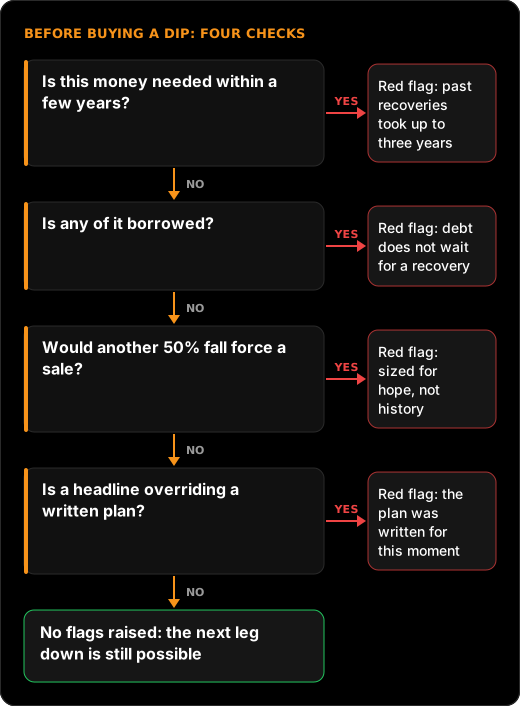
Since the price cannot tell you whether a dip is over, the useful questions are about you, not the chart. The diagram above lays them out:
- Time horizon. Money needed within a few years cannot wait out a drawdown that, in the table, took as long as three years to recover.
- Borrowed money. A loan payment is due monthly whatever the price does, and leveraged positions can be liquidated automatically during exactly these drops.
- A deeper fall. If another 50 percent decline from the purchase price would force a sale, the position is sized for hope, not for history.
- The plan versus the headline. A purchase that follows a plan written in calm conditions is different from one triggered by panic or excitement.
None of these checks predicts anything. They answer a narrower question: can this purchase survive the next leg down?
When Not To
The record also shows a few situations where "buy the dip" thinking tends to go wrong:
- Averaging down with money meant for bills. The stack survives the dip, the budget does not, and the coins get sold anyway.
- Treating a dip as a sure thing. The FTC warns that "only scammers will guarantee profits or big returns." Pitches claiming a recovery is certain fit that description, however confident they sound.
- Going all in at the first drop. In February 2026, the first big drop was not the deepest. A purchaser who spent everything there had nothing left for June.
- Mistaking a narrative for data. Sentiment readings like the Fear and Greed gauge describe the mood. Extreme fear has coincided with some lows and preceded deeper ones. It measures emotion, not value.
Why Schedules Beat Hunches for Many Stackers
A lot of long-term holders sidestep the question entirely. Instead of deciding when a dip is good enough, they buy a fixed amount on a fixed schedule, which automatically buys more sats when prices are low and fewer when prices are high. That approach, and its limits, is the subject of Dollar-Cost Averaging. Whether investing a sum all at once or spreading it out has performed better historically is covered in Lump Sum vs. DCA.
Some stackers add a written rule on top, for example a small extra purchase when the price falls a set percentage from its high, decided in advance and capped in size. The point is not that the rule is clever. It is that the decision was made before the fear arrived. The DCA calculator shows how regular purchases behaved through the drawdowns in the table.
What This Means for You
- Respect the depth of past drawdowns. Declines of 50 to 84 percent appear repeatedly in the daily record since 2017.
- Assume you will not see the bottom. Every major low in the table was only clear afterward, and some first "bottoms" were not.
- The four checks come first. Time horizon, borrowing, sizing and the plan matter more than the size of the drop.
- Rules work best when written before the drop. Decisions made in calm conditions tend to hold up better than decisions made inside a crash.
The dip is never labeled. The only part you control is whether you can afford to be early.